

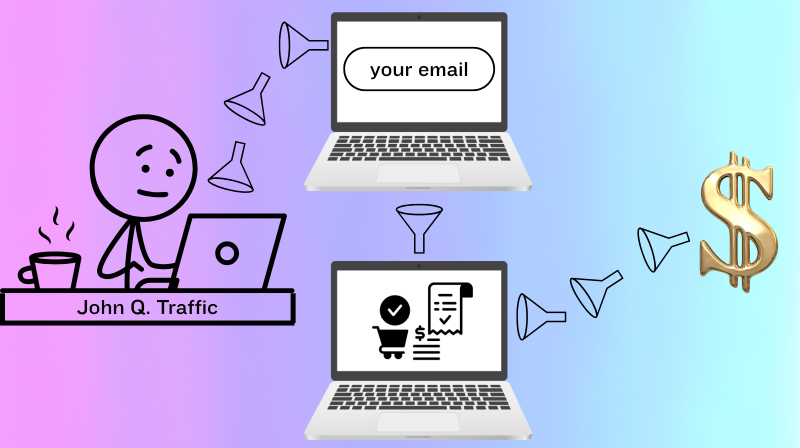
So...you're looking for a way to make some cash. You're thinking something online, doesn't suck up your valuable time, and isn't overly tech complicated. Got it. A lot of us have been scrolling social media looking for the same thing, and if you've spent any amount of time scrolling Instagram, TikTok, Facebook, or YouTube, you've probably encountrered the same video in at least seventeen different forms from at least as many different people. You know what I'm talking about.
A smiling person stands in front of a luxury vehicle they may or may not actually own.
A screenshot of earnings flashes across the screen.
A tropical beach appears in the background.
Then comes the pitch: "I make $15,000 a month working just one or two hours a day and you can, too. Click the link in my bio."
Ok...I'll bite.
I've clicked several links which took me to either a brief video that wanted me to sign up for the "free" masterclass (yeah, they're grabbing my name and email here which gets me on their mailing list. Oh, joy.), or a one page brief overview that again wants my contact information. Some of them actually went straight to the sales pitch offering a "discounted" price for the "done-for-you" program.
Alright, I'll play along. I handed over my information and got to the meat of the matter...or did I?
What I found out is that they all tell you pretty much the same thing. According to these gurus, all you need to do is pick a niche, grab a link, create a funnel, post a few videos, and then spend the rest of your day deciding whether you'd rather work from the beach or the nountains.
Perfect!
Sign me up!
Easy Street, here I come!
Or...maybe not.
If it sounds too good to be true, that's because somebody left out several chapters of the story.
Now, before anyone comes after me with a ring light and a Canva template, let's establish one important fact: affiliate marketing is real. People absolutely make money doing it. Some people make a lot of money doing it. The problem isn't affiliate marketing itself. The problem is the fantasy version being sold on social media, where every success story conveniently skips over the years of work, failed attempts, learning curves and coffee-fueled late nights that happened before the income screenshots appeared.
So, let's pull back the curtain and talk about what wffiliate markeing actually is, how it really works, how the gurus are making their money, and what it actually takes for an average person to earn commissions.
How Affiliate Marketing Works (In Theory)
Affiliate marketing is actually a pretty simple concept. A company wants more customers, but instead of spending all their marketing dollars on advertising, they allow other people to promote their products. Those people—the affiliates—receive a special tracking link that they attach to their social media posts. When someone clicks the link and buys the product, the affiliate earns a commission. Everybody wins. The company gets a sale. The customer gets a product. The affiliate gets paid. SCORE!
Simple, right?
Well...yes and no.
The theory is simple. The execution is where things get interesting.
Here's the little detail nobody talks about (Purposely? You be the judge.): getting an affiliate link is easy. Geting someone to click that link is hard. Getting someone to buy after clicking it is even harder.
That process is called conversion, and it's difficult because you absolutely cannot control another person's actions. This world is full of skeptics. Skeptics will see your link, open a new tab, and go directly to the company. There are several reasons this happens. Lack of trust in the person "advertising" the product and a belief the price is higher when using an affiliate link are two of them.
The Version Social Media Gurus Sell
The social media version of affiliate marketing usually sounds something like this: choose a niche, create a social media account, grab an affiliate link, build a landing page, post content, and collect commisions. What they don't mention is that there are approximately twelve thousand people posting the exact same content, promoting the exact same products, using the exact same hastags, while following the exact same "secret system".
The gurus make it sound like affiliate marketing is a vending machine. Insert content. Receive money. Unfortunately, it's much closer to planting a garden. You prepare the soil. Plant the seeds. Water them. Pull weeds. Protect them from squirrels that apparently exist solely to destroy your hopes and dreams. Then, after considerable effort and patience, you may eventually get tomatoes. Affiliate marketing works the same way. The money comes later. The work cones first.
The other tidbit they leave out is how to get traffic, the people seeing your post, in the first place. That boils down to a numbers game and in some cases a willingness to pay to have your posts get in front of more people.
What the Gurus are Realy Doing
Here's where things get interesting. Most affiliate marketing influeners aren't simply affiliate marketers. They're marketers, content creators, business owners, and audience builders. Many of them make far more money teaching affiliate marketing or selling a done-for-you system than they do actually performing affiliate marketing.
Think about the typical reel. Someone flashes an income screenshot, shows a luxury lifestyle, explains a simplified process, and then ends with: "Comment START," "DM me FREEDOM," "Get my free guide," "Download my free blueprint," "Join my free workshop," or something similar. Notice the word that keeps appearing? FREE.
Now, let's follow the journey.
Out of true interest, curiosity, or sheer desperation, you make the required comment to get the "free" information. Often this is pretty basic content and really won't get you where you need to be in order to start making any serious money from affiliate marketing. Next, you're invited to a webinar where you're told you'll learn the nuts and bolts of this business model, and you think to yourself, "What the heck...in for a penny in for a pound," and you register for it. (Yay! they now have your contact email and will bombard you with daily emails.)
Woo hoo, webinar day is here! You've received your link to access the "live" event in your email. Brace yourself. The webinar, none of which are actually live even though the guru acts like they're interacting with comments from participants, will absorb on average an hour of your time. The presenter will repeat a lot of what they've already shared in their reel. They'll tell you their personal background, talk about how they finally came to doing affiliate marketing, and make sure they share screen shots of payouts that show hundreds if not thousands of dollars a day. They talk about how it's changed their life, let them quit their 9-to-5 job, retired their spouse, paid off multiple thousands of dollars in debt, and afforded them the ability to live a free, luxurious lifestyle. Thrown in the mix are supposed testimonies from their "students", aka people who bought their program, who also now live the luxe life. They tell you how this could be you, too, and by the end of the webinar, they're hoping you believe it and buy their program.
There's a psychology behind the presentation. Notice that key things are repeated throughout the presentation. It's like the carrot in front of the donkey, but it's all about psychology. What's the psychology you might ask. Simply put it's the Rule of 7 which states that a person needs to see or hear a brand's message on average seven times before they'll actually buy, hence all of the repetition.
Please, don't misunderstand. There is nothing wrong or illegal with what they are doing. Every sales pitch utilizes the concept to one degree or another. Just be aware that the guru is making the bulk of their money by selling their program not through their affiliate links. In other words, they're teaching how to fish while selling fishing poles, fishing bait, fishing lessons, a fishing mastermind, and a premium fishing retreat in the Bahamas.
Why Most People Never Make Money
Sorry, folks, this is the part nobody wants to hear. Most people don't or won't make money doing this because they focus on the affiliate liink instead of the audience. The affiliate link is not the business. The audience is the business.
Think about your own buying habits. When was the last time you purchased something because a random stranger on the internet told you to? Exactly! People buy from people they trust. That trust is built through consistent content, useful information, honest recommendations, and showing up repeatedly over time.
Most beginners spend hours searching for the perfect affiliate program while spending almost no time learning how to attract an audience. Coincidentally, this isn't taught in any masterclass, and, frankly, it's like buying a cash register before opening a store.
How People Actually Get Clicks
This is the part that truly matters. People don't click links because links exist. People click links because they're looking for solutions.
If someone has a problem and you provide a useful answer, you've earned their attention. If they trust your answer, you've earned a click. If the product solves their problem and they buy it, you've earned a commission. The most successful affiliate marketers understand this. Instead of constantly promoting products, they create content that solves problems. A budgeting affiliate teaches people how to save money. A fitness affiliate teachers people how to exercise. A gardening affiliate teaches people how to grow tomotoes that squirrels won't destroy.
In a nutshell (ha! no pun intended), the content comes first then the affiliate recommendation. This is why educational content performs so well.
People are searching for answers. When you become the person preovicding those answers, clicks naturally follow.
How People Actually Get Conversions
Getting a click is only half the battle. A click doesn't pay commissions; a purchase does. This is where conversions come into play.
A conversion happens when someone clicks your affiliate link and completes the desired action, usually making a purchase.
One of the biggest mistakes beginners make is promoting products they know nothing about. You can't talk about something you have no knowledge about or no first-hand experience with. People can sniff out a fake recommendation from a mile away.
If you genuinely use a product, understand its benefits, and can explain how it solves a problem, your recommendations become much more persuasive.
Successful affiliates don't scream: "BUY THIS NOW!" That'll fasttrack your reel to the scrolled past cemetary.
The path to conversion starts with explaining. You want to identify with the problem by stating something like "Here's the problem I had." Move on to "Here's what I tried," "Here's what worked," and wrap it up with "Here's why I recommend it." This approach feels authentic because it is.
People buy solutions not links.
What it Actually Takes to Make Affiliate Marketing Work
For most of us regular folk, affiliate marketing success usually looks far less glamorous than social media would have you believe.
The first thing you need is a niche. Often within those reels and webinars, the top five categories are mentioned with the underlying nudge for you to pick one of them as your niche. Having a popular niche is both good and bad. It's good because it provides an ocean of potential conversions. It's bad because your link is one of thousands in that ocean. The other problem may be that none of the niches fit you, your experiences, nor your expertise. Remember, it's much easier to talk about things you have knowledge about and experience with.
Step two is to start building your audience. These are the people who are looking for what you're talking about and wanting to know how you solved the same problem they are currently having. How do you convey that knowledge? It could be through a blog, YouTube channel, email newsletter, Facebook group, Instagram, TikTok, or any other social media platform that gets your information in front of people. In reality you'll likely use more than one format.
Here's the part that's often skimmed over or skipped entirely. You must create useful content. LOTS of useful content. Then create even more useful content. It's definitely a wash, rinse, repeat process.
Many beginners are stuck trying to figure out what kind of content to create. To start, I'd suggest answering questions, solving problems, teaching something, sharing your experiences, being helpful. The questions and problems aren't being directly asked by your audience...not yet. You're posing the questions and problems then providing the answers and solutions.
Keep repeating step two over and over and over again. When people begin recognizing your name and content, trusting your advice, returning for more content, they'll interact by liking, sharing, following, and commenting. When your number of followers increases, sharing affiliate links becomes more meaningful as the likelihood of clicks and conversions also increases. Why? You've taken the time to build a following and build trust in that following. Your recommendations carry weight because you've established credibility.
When you get right down to it, affiliate marketing isn't really about selling products. It's about building trust. The products simply become a natural extension of that trust.
The Reality Nobody Puts in a Reel
Time for a little reality check.
Can you really generate income from affiliate marketing? Absolutely! For some it'll be a side hustle for some extra cash. For others it'll become a full-time business that pays as much or more than their salaried job. It can actually become semi-passive after you've built enough content and audience.
BUT...
It's not magic.
It's not instant.
It's not a shortcut.
Most successful affiliate marketers have spent months or years creating content, learning marketing, studying their audience, testing different approaches, building email lists, and refining their skills. The supposed overnight success story you see in a reel today is often standing on top of several years of invisible work. Honestly...that's good news because it means success isn't reserved for people with perfect lighting, luxury cars, and suspiciously blurry income screenshots. It's available to regular people who are willing to learn, create, help others, and stay consistent long enough to see results.
Not exactly the kind of message that goes viral on TikTok, but it happens to be true. And truth, while significantly less flashy, tends to age a lot better than hype.
Coffee on. Chaos Managed. ☕

Add comment
Comments