


Let’s be honest for a second. If thinking too much actually burned calories, half the population would have six-pack abs and runway contracts. Entire fitness industries would collapse overnight because instead of going to the gym, we’d just lie in bed at 2:17 a.m. replaying conversations from 2008.
“Did I sound weird when I said that?”
“Should I have worded that email differently?”
“Why did they pause before responding?”
“Oh great, now they probably think I’m rude.”
Congratulations. Your brain just ran a mental marathon… and you didn’t even leave the couch.
Overthinking is one of those habits almost everyone has, yet nobody admits to until someone else says it out loud. Then suddenly everyone’s nodding like, “Oh thank goodness, it’s not just me.”
But here’s the thing: overthinking isn’t just a quirky personality trait. It’s something your brain actually does on purpose.
Let’s talk about why.
First, your brain thinks it’s helping.
Your brain has one main job: keep you safe. Not happy. Not calm. Safe.
Thousands of years ago, this was extremely useful. If our ancestors heard a rustle in the bushes and thought, “Hmm, that could be a tiger,” they survived. If they shrugged and said, “It’s probably nothing,” they might have become lunch.
So the brain developed a habit of scanning for problems, replaying situations, and predicting what might go wrong next.
Fast-forward to modern life, and the same survival system is still running… except now the “tiger” is a text message that ended with a period instead of an emoji.
Your brain treats uncertainty like danger. When something feels unclear—someone’s tone, a delayed reply, a vague comment—your brain starts filling in the blanks. And unfortunately, it tends to fill them in with worst-case scenarios.
Not because it hates you. Because it thinks it’s protecting you.
Second, overthinking creates the illusion of control.
If we think about something long enough, we start to believe we’re solving it. Analyzing it. Getting closer to an answer.
But most of the time, overthinking isn’t problem-solving. It’s mental spinning.
Problem-solving sounds like this:
“What’s the issue? What are my options? What’s the next step?”
Overthinking sounds like this:
“What if they misunderstood me?”
“What if they’re upset?”
“What if this turns into a huge problem?”
“What if this means something terrible?”
Notice the difference? One moves forward. The other just loops.
Overthinking feels productive because your brain is busy. But being busy isn’t the same as being useful.
Third, the modern world practically trains us to overthink.
Think about how many situations we encounter every day where we’re left to interpret things without context.
Text messages.
Emails.
Social media posts.
Short responses.
Delayed replies.
Without facial expressions or tone of voice, our brains fill in the blanks—and they’re not always generous about it.
Someone sends “Ok.”
Your brain hears: “They’re annoyed.”
Someone doesn’t respond for six hours.
Your brain hears: “They’re upset with you.”
Someone cancels plans.
Your brain hears: “They secretly hate you now.”
Meanwhile, the other person is probably just stuck in traffic, busy with work, or forgot their phone on the kitchen counter.
But your brain? It has already written a full dramatic storyline.
And it did it in under 90 seconds.
Fourth, overthinking drains your mental energy.
One of the most frustrating things about overthinking is that it doesn’t just stay in your head for a moment. It lingers.
It follows you while you’re cooking dinner.
While you’re working.
While you’re trying to relax.
While you’re trying to sleep.



That’s because unresolved thoughts act like open tabs in your brain. Each one quietly using energy in the background.
Ever notice how mentally exhausted you can feel after worrying about something for hours—even if nothing actually happened?
That’s not your imagination. Your brain was working overtime.
The tricky part is that overthinking feels like preparation. But most of the time, it’s just emotional wear and tear.
So how do you stop the spiral?
The good news is that you don’t need to become some perfectly calm, zen-like human who never worries again. That’s not realistic.
But you can interrupt the cycle.
One of the simplest ways is to ask yourself a powerful question:
“Is this a problem I can solve right now?”
If the answer is yes, take action.
Send the email.
Clarify the misunderstanding.
Make the decision.
Action shuts down a lot of overthinking because it replaces speculation with movement.
If the answer is no, then your brain is trying to solve something that doesn’t actually have an answer yet.
And that’s where a lot of overthinking lives.


Another helpful trick is setting a “thinking window.”
Instead of trying to force yourself not to think about something—which never works—you give your brain permission to think about it at a specific time.
Tell yourself, “I’ll think about this at 7 p.m. for ten minutes.”
Strangely enough, your brain often relaxes once it knows the thought isn’t being ignored—it’s just scheduled.


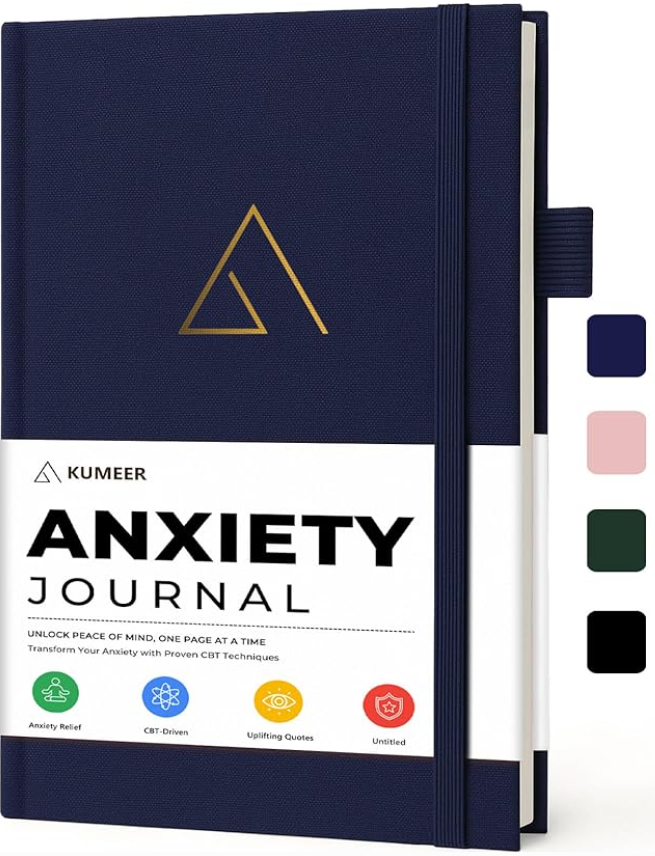
A third strategy is to challenge the story your brain is writing.
When you catch yourself spiraling, ask:
“What evidence do I actually have?”
Not guesses. Not interpretations. Evidence.
You might discover that most of what your brain is panicking about is based on assumptions rather than facts.



Finally, remember something important: everyone overthinks sometimes.
Even people who appear calm and confident have moments where their brain decides to host a late-night analysis party.
The difference isn’t that they never overthink.
It’s that they don’t believe every thought their brain produces.
Your brain generates thousands of thoughts every day. Some are useful. Some are ridiculous. Some are dramatic enough to qualify for their own soap opera.
But just because your brain thinks something doesn’t mean it’s true.
And it definitely doesn’t mean it deserves hours of your energy.
So the next time you catch yourself replaying a conversation for the fifteenth time or trying to decode a two-word text message like it’s an ancient scroll, take a breath and remind yourself of something:
Your brain is just trying to protect you.
It’s a little overenthusiastic about the job sometimes… but its heart is in the right place.
And while overthinking may not actually burn calories, it does give us a pretty good reminder that our brains are incredibly active, creative, and occasionally dramatic little problem-solving machines.
The trick isn’t turning them off.
It’s learning when to tell them, kindly but firmly, “Thanks for the input… but we’re done with this one.”
Coffee on. Chaos managed ☕
Add comment
Comments